.jpg)
Vitiligo on hands: why it starts there and what really helps
White patches on the backs of the hands, around the knuckles or on the wrists are often the very first sign of vitiligo. Hands are always on show, so it is understandable that they bother people the most. The good news: there is a clear, step-by-step way to look after them – and many of our customers have seen their hands repigment with consistent care.
- Hands, wrists and fingers are among the most common sites of vitiligo (NHS).
- Friction, small cuts and frequent washing can trigger new patches – the so-called Koebner phenomenon.
- Hands usually respond more slowly than the face or neck, so plan in months, not weeks – and keep going.
- UK first-line options are creams prescribed by your GP or dermatologist, then narrowband UVB (311 nm) light, including handheld lamps at home.
- Sun protection and good camouflage make day-to-day life much easier while the skin works on repigmentation.
What vitiligo on the hands looks like
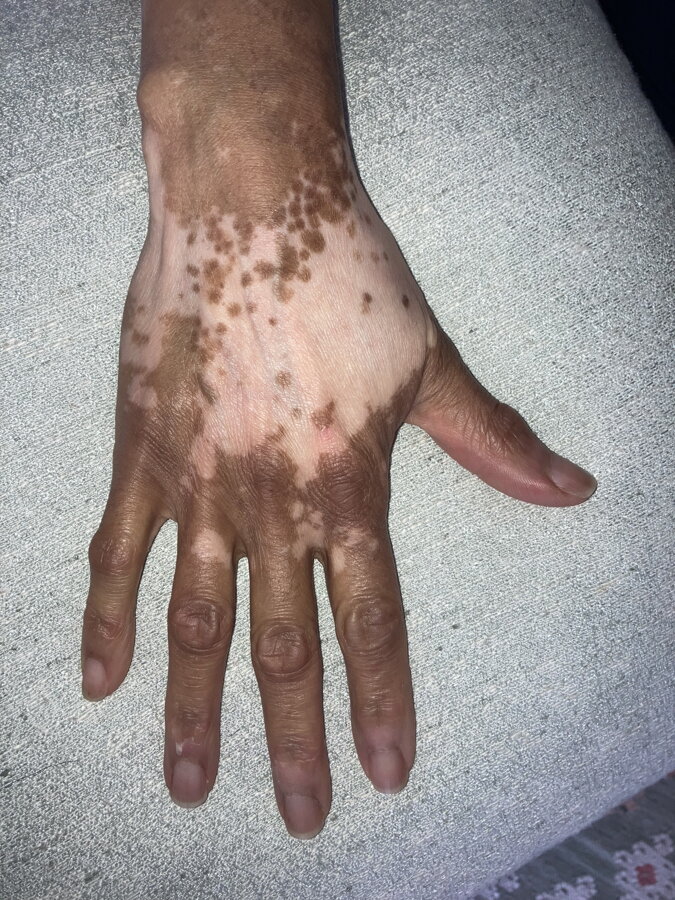
Vitiligo shows up as milky-white, well-defined patches of skin that have lost their pigment (melanin). On the hands it typically starts on the backs of the hands, around the knuckles, on the wrists or at the fingertips, and it often appears on both hands at once in a fairly symmetrical pattern. The patches do not hurt and the skin feels completely normal – only the colour changes. On lighter skin they can be hard to notice in winter and become much more visible in summer, when the surrounding skin tans.
If the patches itch, flake, feel thickened or look red, it is worth asking a doctor to check the diagnosis – other conditions, such as fungal infections or eczema after-marks, can look similar.
Why vitiligo so often starts on the hands
Vitiligo is an autoimmune condition: the immune system mistakenly targets the pigment cells (melanocytes). Doctors do not yet know exactly why it starts where it does, but the hands have two things in common with other typical vitiligo sites:
- Constant friction and small injuries. Rubbing, pressure, scratches, burns and even tight rings or watch straps can trigger new patches in people prone to vitiligo. Dermatologists call this the Koebner phenomenon.
- Frequent washing and harsh products. Detergents, solvents and cleaning products dry and irritate the skin. Certain chemicals, such as some phenol-based products, can also trigger loss of pigment.
That is why everyday hand care is such an important part of the plan, not just the treatment itself.

How vitiligo on the hands is treated in the UK
The British Association of Dermatologists guideline sets out a clear order of steps. Your GP or dermatologist will tailor it to you:
- Prescription creams first. For areas other than the face, the usual first step is a potent steroid cream used for a limited period, sometimes in a pulsed regime. Tacrolimus ointment is another option your doctor may suggest.
- Narrowband UVB (311 nm) light. If creams are not enough, NB-UVB is the recommended light treatment – either in a hospital phototherapy unit or with a handheld lamp at home. A handheld lamp is especially practical for hands, because you can treat them in a few minutes without travelling to a clinic two or three times a week.
- Combining treatments. Light therapy is often combined with a topical treatment. The guideline also notes that the face and trunk usually repigment better than the hands and feet – so on the hands, consistency matters most.
New and active patches generally respond better than patches that have been white for many years – so starting early really pays off.
Home light therapy for hands: how our customers do it
Most of our customers with vitiligo on their hands use a simple routine built around a handheld 311 nm UVB lamp:
- Apply Vitistop Gel to the patches and wait about 30 minutes.
- Treat the hands with the lamp two to three times a week, leaving at least 48 hours between sessions. Start with a very short exposure and lengthen it gradually, only if there is no redness the next day – exactly as described in the lamp instructions.
- Take one Vitistop tablet a day – it contains copper, which contributes to normal skin pigmentation, plus zinc and other nutrients.
- Protect the patches from sunburn in summer and keep a simple photo diary every four weeks – it is the best way to see progress that is easy to miss day to day.
Not sure which lamp to choose? The compact Philips BU-1S is our best seller and ideal for hands and wrists; the Philips BU-10 has a timer and precise dosing. Our guide How to choose a home UVB lamp compares them side by side, and the day-by-day treatment plan shows the whole routine step by step.
Everyday care: protect your hands
- Gloves for chores. Wear gloves for washing up, cleaning and gardening to avoid friction, chemicals and small cuts.
- Gentle soap and moisturiser. Use a mild, fragrance-free hand wash and moisturise after washing to keep the skin barrier healthy.
- Watch out for rubbing. Tight rings, watch straps and bag handles that rub in the same spot can trigger new patches.
- Sun protection. White patches burn easily. Use a high-protection sunscreen on the backs of the hands, which are exposed every day – including when driving.
Covering vitiligo on the hands
While the skin works on repigmentation, camouflage can make a big difference to how you feel. The NHS and the British Association of Dermatologists both mention skin camouflage as a valid option. For hands, a self-tanning product is often the most practical choice because it does not rub off on clothes or when you wash your hands:
- Vitistop Self-Tanning Mousse develops into a natural-looking colour within a few hours and usually lasts five to seven days. Apply it with the Mini Mitt for precise blending on hands and knuckles.
- For instant cover on a special day, see our camouflage range.
Not sure where to start with your hands? Write to us about your skin – Peter, who has lived with vitiligo since 2016, and his team will suggest a routine that fits you.
See the treatment planCustomer resultsFrequently asked questions
Can vitiligo on the hands go away?
Yes, pigment can return on the hands. Hands usually respond more slowly than the face or neck, so most people need several months of consistent treatment – typically creams prescribed by a doctor and narrowband UVB light – before they see clear repigmentation. New patches tend to respond better than old ones.
Why did my vitiligo start on my hands?
The hands are exposed to constant friction, small injuries, frequent washing and chemicals. In people prone to vitiligo these can trigger new patches (the Koebner phenomenon). That is why the hands, wrists and fingers are among the most common places for vitiligo to begin.
Is a home UVB lamp safe for vitiligo on the hands?
Handheld 311 nm narrowband UVB lamps use the same type of light as NHS phototherapy units. Start with very short sessions, increase the time gradually only if there is no redness, protect your eyes and follow the instructions supplied with the lamp. If you take medicines that make the skin sensitive to light, speak to your doctor first.
How long does it take for hands to repigment?
It varies from person to person. Many people notice the first small pigment dots after a few months of regular treatment, and larger areas can take a year or more. Taking a photo every four weeks in the same light is the best way to track progress.
How can I hide vitiligo on my hands?
A self-tanning mousse such as Vitistop Self-Tanning Mousse gives a natural-looking colour that usually lasts five to seven days and does not wash off when you wash your hands. Cover creams and make-up are an option for special occasions.
Vitiligo on other parts of the body
Sources: NHS – Vitiligo; Eleftheriadou V. et al. British Association of Dermatologists guidelines for the management of people with vitiligo 2021, Br J Dermatol 2022; NICE TA1140 – ruxolitinib cream for non-segmental vitiligo (March 2026); DermNet – Vitiligo.
This article is general information, not medical advice. Vitiligo should be diagnosed by a GP or dermatologist, and any new or changing skin patch is worth showing to a doctor. Our products support skin care alongside the treatment your doctor recommends.